Great Western Construction Blog
ICF vs Stick Built Homes in Wyoming: Which One Is Right for Your Build?
May 26, 2026 | Peterson SEO | Sheridan, WY | USA
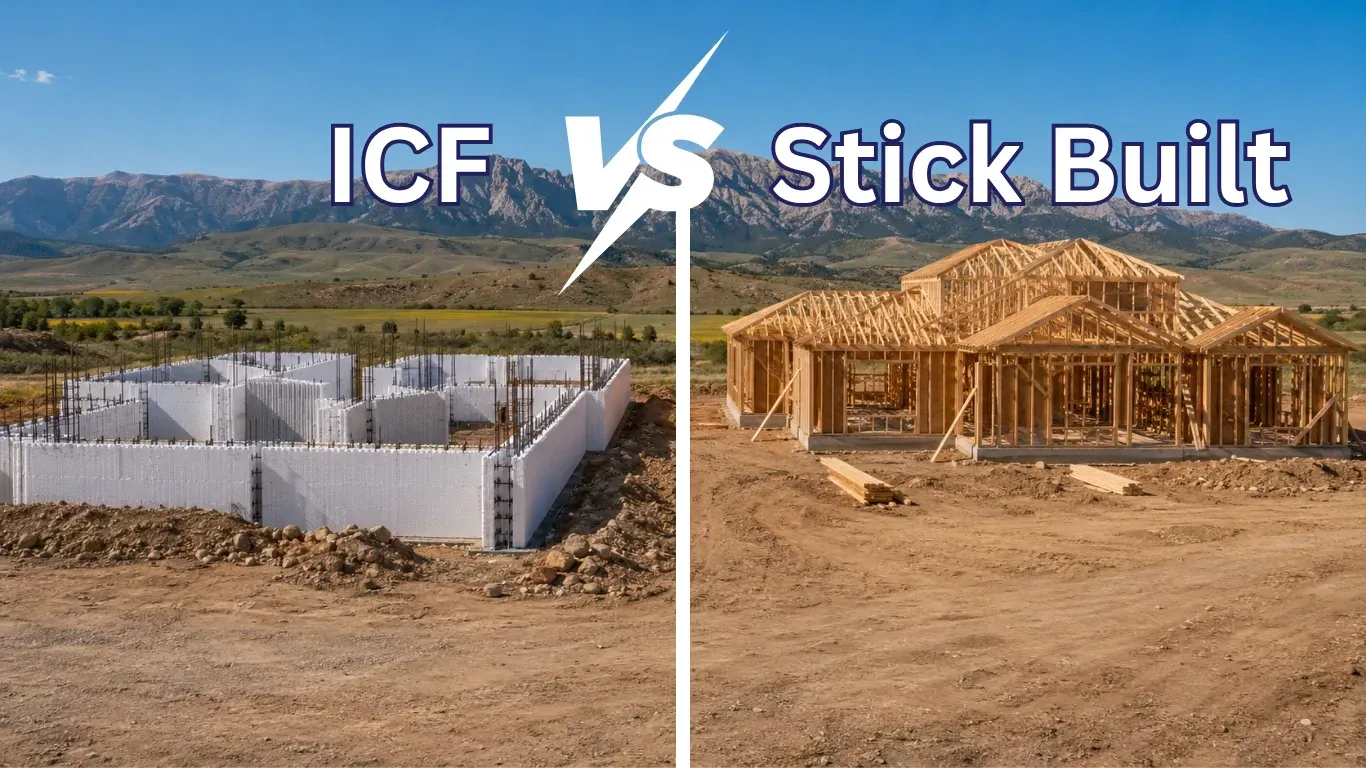
Most people building a home in Wyoming start with the same question their parents and grandparents asked: how do I build something that holds up? Wood framing has been the standard answer for most of the last century, and it is still the right answer for many buyers. ICF concrete construction has been gaining ground as an alternative, and for good reason. It performs differently in ways that matter in a Wyoming climate. But it is not automatically the right choice for every project, every budget, or every homeowner.
This article compares both options honestly. The goal is not to sell you on one method. It is to help you understand what is actually different between the two so you can make the decision that fits your land, your goals, and your long-term plans.
What Is the Difference Between ICF and Stick Built Homes?
The core difference between ICF vs stick built homes Wyoming buyers are comparing is the exterior wall system. A stick built home uses wood framing as its structural foundation. Insulation is installed between the studs, sheathing goes on the outside, and exterior finishes complete the assembly. An ICF home uses hollow foam forms stacked into the shape of the exterior walls, reinforced with steel rebar, and filled with poured concrete. The foam stays permanently in place after the pour, providing continuous insulation on both sides of the concrete core. According to a study by the U.S. Department of Housing and Urban Development, ICF construction generally adds about three to five percent to the total purchase price of a typical wood frame home and land, or about five to ten percent of the house-only construction cost. That same study identifies ICF benefits in structural safety, energy efficiency, comfort, durability, and noise control.
The practical difference is in how each wall system performs over time. Wood framing is familiar, widely supported by trades and lenders, and produces excellent homes when it is well designed and properly detailed. ICF creates a denser, more airtight wall with continuous insulation and no thermal bridging through the framing. The choice between them depends on which set of trade-offs fits your priorities.
How the Two Wall Systems Actually Work

A standard stick built exterior wall typically includes wood studs at 16 or 24 inches on center, batt insulation between the studs, structural sheathing, a weather-resistant barrier, and exterior finish materials. The insulation sits between the framing members, which means the studs themselves create pathways for heat to move through the wall. This is called thermal bridging, and it reduces the effective insulation performance of the wall below what the insulation alone would suggest. A wall with R-19 fiberglass batts between wood studs may perform closer to R-15 in practice because of bridging through the framing.
An ICF wall works differently. The foam forms sit on both sides of the concrete core and stay in place permanently. There is no framing in the exterior wall to interrupt the insulation layer. The continuous foam provides consistent thermal resistance across the entire wall surface. The concrete core adds thermal mass, which helps the wall absorb and release heat more gradually, stabilizing interior temperatures during cold nights and warm afternoons. Nudura states that its ICF wall assemblies provide a fire resistance rating of over four hours and can withstand winds up to 250 miles per hour. For comparison, a standard wood frame wall carries approximately a 45-minute fire resistance rating.
Both wall systems can be finished on the interior with drywall, trim, and all the details of a custom home. Both can be finished on the exterior with stone, siding, stucco, board and batten, or timber accents. The structural difference is inside the wall, where it affects performance but not visual design.
Which Costs More to Build: ICF or Stick Built?
Stick built construction is typically less expensive upfront than ICF construction. The HUD study cited above found that ICF adds roughly three to five percent to the total project cost or five to ten percent of the structural build cost compared to conventional framing. In practice, the gap depends on the home design, builder experience with ICF, local labor and material costs, wall height, and how much of the premium you are comparing. A simple home built with standard stick framing will generally cost less than a comparable ICF home.
The more useful comparison, however, is total cost of ownership rather than construction cost alone. ICF homes typically deliver lower monthly heating and cooling costs because of the continuous insulation and reduced air infiltration. They may also qualify for lower insurance premiums in high-fire-risk areas. The exterior wall requires less maintenance over time than wood framing, which can be affected by moisture, insects, and material degradation. For a homeowner planning to stay in the home for twenty or thirty years, those ongoing savings change the comparison meaningfully.
Our earlier article on the cost to build a house in Wyoming covers how structural system choice is one of five factors that most affect total project cost. Building type is the starting point for the budget conversation, and ICF vs stick built is where that conversation begins for custom home buyers. If you are comparing options and want to understand what each method means for your specific project budget, that article is the right place to start.
Which Is More Energy Efficient in a Wyoming Climate?
ICF homes are generally more energy efficient than stick built homes because the wall system provides continuous insulation without thermal bridging and creates a naturally tighter building envelope. In Wyoming, where heating season is long and winter temperatures can drop well below zero, that difference shows up consistently in monthly energy costs. The HUD study on ICF construction found that homeowners can expect meaningful reductions in heating and cooling energy demand compared with standard wood frame construction, with Nudura citing up to a 58 percent improvement in energy efficiency in some applications.
A stick built home can also achieve good energy performance, but it requires disciplined attention to insulation installation, air sealing at every penetration and junction, window quality, vapor control, and mechanical system design. When all of those details are done well, a wood framed home can perform significantly better than code minimum. When they are not, homeowners may notice drafts, cold spots, and heating bills that do not match their expectations. ICF starts with a more forgiving wall assembly where the continuous insulation does more of the work regardless of the other details.
For commercial construction, energy efficiency carries additional weight because it affects operating costs over the life of the building. A commercial ICF building in Wyoming can deliver meaningful long-term savings on heating and cooling compared to a conventional commercial build, which matters especially for owner-occupied commercial properties where the business absorbs those costs directly.
How Does Fire Resistance Compare Between ICF and Stick Built?
ICF has a significant fire resistance advantage over standard wood framing. Concrete does not burn. The foam forms in an ICF wall are encased within the wall assembly and protected by the concrete core. Nudura's ICF wall system is rated for over four hours of fire resistance, compared with approximately 45 minutes for a conventional wood frame wall. That difference is not trivial in areas where wildfire risk is a real planning consideration.
Sheridan County's wildfire risk is rated higher than 92 percent of all U.S. counties by the U.S. Forest Service. For homeowners building on rural acreage or land near open range, that risk is part of the site context whether they choose to plan around it or not. ICF construction does not make a home fireproof. Roof materials, window glazing, vents, exterior finishes, and the defensible space around the home all still matter. But the exterior wall system is one of the most significant variables in how a structure performs during a fire event, and ICF starts that conversation from a much stronger position than wood framing.
For commercial construction, fire resistance also affects insurance costs, code compliance requirements, and the long-term durability of the building investment. A commercial ICF building may face fewer fire-related code hurdles and lower long-term insurance costs in high-risk areas.
Which Is Quieter: ICF or Stick Built?
ICF homes are typically quieter than stick built homes. The reinforced concrete wall system is denser and heavier than wood framing, which reduces how much sound passes through the exterior walls. The HUD study on ICF construction specifically identifies improved outdoor noise reduction as a comfort benefit of ICF compared with standard wood framing. For homeowners building near agricultural operations, rural roads, wind exposure, or any source of exterior noise, that difference is a genuine quality of life consideration.
The difference is noticeable in everyday living. A concrete wall does not vibrate or transmit sound the same way wood framing does. During a Wyoming windstorm, an ICF home tends to feel more sheltered and settled. During seasonal equipment activity on neighboring properties, the exterior noise is reduced. Bedrooms and home offices near exterior walls benefit from the added sound control.
Stick built homes can be improved with upgraded insulation products, resilient channels in interior walls, laminated or triple-pane windows, and careful sealing at all penetrations. Those upgrades close some of the gap, but they also add cost. ICF provides the sound control benefit as part of the standard wall system.
Do ICF Homes Look Different From Stick Built Homes?
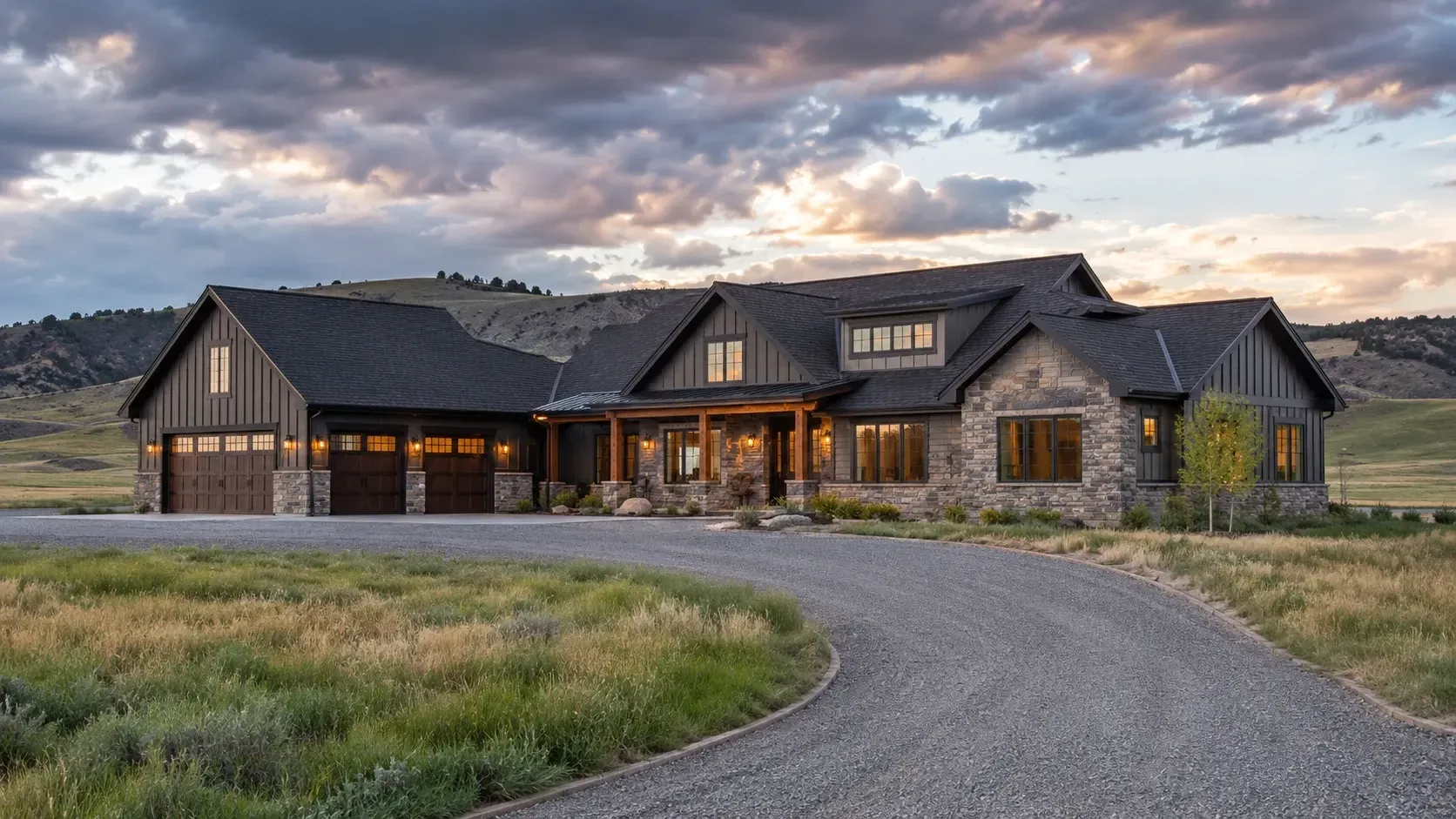
No. An ICF home does not need to look any different from a stick built custom home. The exterior can be finished with stone, board and batten, stucco, siding, brick, timber accents, or any combination of materials. The interior is framed, drywalled, trimmed, and finished identically to a stick built home. Most people who visit a completed ICF home have no idea the exterior walls are reinforced concrete unless someone tells them.
The misconception that ICF homes look like concrete bunkers or commercial buildings comes from seeing unfinished construction photos, not finished homes. The foam forms and concrete core are completely hidden behind the finish materials on both the interior and exterior. The architectural style, roofline, windows, and exterior finish determine how the home looks. The wall system determines how it performs. You do not have to choose between a home that looks right and a home that performs well.
For Wyoming buyers building a custom home on acreage, this matters because the aesthetic goals are often strong. Mountain style architecture, ranch-inspired design, modern farmhouse details, and timber accents all work equally well over an ICF wall as over conventional framing. The structure underneath is different. The design on top is entirely up to you.
When Does Stick Built Construction Make More Sense?
Stick built construction makes sense for a wide range of Wyoming buyers and projects. It is the most common building method for a reason. Wood framing is familiar to every trade, well understood by inspectors and lenders, and produces excellent homes when it is designed and built with care. For buyers working with a tighter budget, building inside a developed subdivision, or planning a home they may not own for thirty years, stick framing may be the more practical choice.
Stick built also makes sense when the design calls for extensive future modifications. Interior and exterior walls are relatively easy to alter in a wood framed home compared to a concrete structure. If a buyer expects to significantly change the floor plan, add rooms, or modify exterior walls, the flexibility of wood framing has real practical value. Most ICF modifications to exterior walls require concrete cutting, which adds cost and complexity compared to conventional framing.
Commercial stick built construction also remains common for many types of structures, particularly light commercial, retail, and office buildings where the occupant does not own the property long-term and energy and fire performance requirements do not favor the ICF premium. For short-term investments, adaptive reuse projects, and simpler commercial builds, conventional framing is often the practical choice.
When Does ICF Construction Make More Sense?
ICF makes the most sense for homeowners building a permanent home they intend to own for many years, especially on rural or acreage properties where fire risk, wind exposure, energy performance, and long-term durability are meaningful considerations. If you are building a forever home and you want the strongest, most efficient, and quietest wall system available from the start, ICF delivers all of those things in a single decision.
ICF also makes sense for commercial construction where long-term ownership and operational costs matter. An owner-occupied commercial building built with ICF can deliver decades of lower energy costs, lower maintenance, and stronger fire and wind resistance. Schools, healthcare facilities, and mixed-use buildings have all adopted ICF construction because the performance benefits align directly with the long-term priorities of those projects.
For buyers who have done the research and arrived at this comparison with clear priorities around fire resistance, energy efficiency, sound control, or long-term durability, ICF is worth a serious conversation with a builder who has real experience with the system. The HUD study notes that construction cost and quality are affected by the contractor's familiarity with ICF because there is a learning curve with any specialized building process. Working with a builder who has built multiple ICF homes is not optional. It is how you protect the investment you are making in the wall system.
How Your Land Affects This Decision
The construction method you choose has to work with the land you are building on. ICF requires reliable access for concrete trucks, pump equipment, forms, and rebar delivery throughout the foundation and wall phase. A site that is difficult to access or stage on can add cost to the concrete work that changes the ICF comparison. Before making a final decision on construction method, it is worth understanding what the land requires. Our article on buying land in Wyoming covers what to evaluate before you commit to a parcel, including access, site conditions, utilities, and how land preparation costs affect the overall project budget.
For both ICF and stick built construction, the land preparation costs are the same. Driveway, grading, utilities, well, septic, and foundation work happen before either wall system goes up. The land shapes the total project cost regardless of which building method you choose. Getting clarity on site requirements early keeps the construction method comparison grounded in the real numbers for your specific project.
Questions to Ask Before You Decide
How long do you plan to own this home?
If you are building a forever home, the long-term performance benefits of ICF have more years to pay off. If you are planning a shorter ownership horizon, the upfront cost difference carries more weight.
How important is energy performance to you?
If lower heating costs, consistent indoor temperatures, and reduced draft are meaningful priorities, ICF starts from a stronger position. A well-built stick framed home can also perform well, but it requires more careful detailing to get there.
How concerned are you about fire risk?
If you are building on rural acreage or land with wildfire exposure, the four-hour fire resistance rating of ICF is a meaningful structural advantage over the 45-minute rating of wood framing.
Does your builder have real ICF experience?
ICF is a specialized building process. A builder who has completed multiple ICF homes understands concrete placement, form bracing, window and door installation, and the sequencing that makes ICF construction go smoothly. That experience directly affects both the quality and the cost of the finished build.
Is this a residential or commercial project?
Both residential and commercial buildings can be built with either method. For commercial projects, the long-term operational cost savings and fire resistance benefits of ICF may carry additional weight, especially for owner-occupied buildings where the business absorbs energy and maintenance costs directly.
Ready to Compare ICF and Stick Built for Your Wyoming Project?
The decision between ICF vs stick built homes Wyoming buyers face comes down to priorities, not a single right answer. Stick built construction is proven, practical, and well-supported by every trade in the market. ICF construction offers a different performance profile that becomes more compelling the longer you plan to own the home and the more you care about fire resistance, energy efficiency, sound control, and long-term durability. Both can produce an excellent Wyoming home when they are planned and built well.
Great Western Contracting Design & Consulting Services LLC is an authorized Nudura ICF installer with over 30 years of construction experience in Northeast Wyoming. We build both ICF concrete homes and conventional structures, which means we can help you compare options honestly based on your specific land, budget, and goals rather than steering you toward one method. Contact us to talk through your project and we will give you a straight answer on which approach makes the most sense for your build.
About Great Western Contracting
Great Western Contracting is Sheridan County's trusted builder for custom ICF concrete homes, post frame buildings, barndominiums, commercial construction, and historic restoration across Northeast Wyoming. Built on 30 years of hands-on experience, the company helps homeowners, ranchers, and business owners plan projects that fit their land, their budget, and the demands of the Wyoming climate. From the first honest conversation through the final walkthrough, every project is handled with straight answers, careful planning, and craftsmanship built to last.
Ready to Build? Let's Talk.
Tell us about your land, your project, and what you want to build. Great Western Contracting will get back to you within one business day.
Ready to Build on Wyoming Land?
If you are planning a custom ICF concrete home, a post frame building, a commercial structure, or a restoration project across Northeast Wyoming, our team is here to help you plan it right before the first dollar is committed. Reach out to Great Western Contracting to talk through your property, your goals, and what honest construction planning looks like.