Great Western Construction Blog
What Should You Know Before Buying Land in Wyoming to Build On?
May 26, 2026 | Peterson SEO | Sheridan, WY | USA
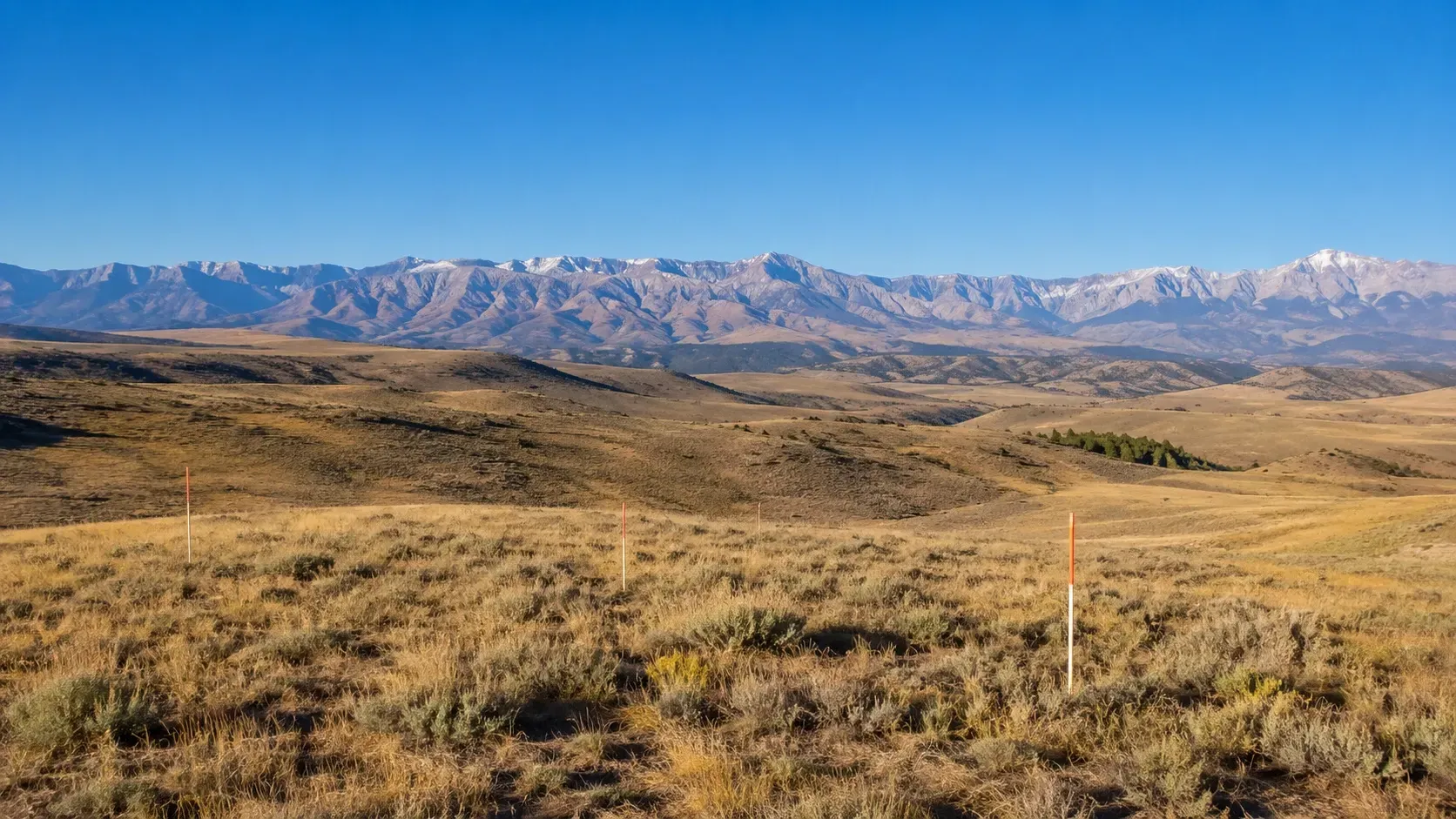
For most people, the land comes first. You find a parcel with the right acreage, the right views, and enough space to build the way you have been picturing it. Whether you are planning a custom home, a farm or ranch building, or a commercial property, the instinct is to start imagining what goes on the land rather than what the land itself requires. That instinct is understandable, but it can be expensive if the practical questions get left until after closing.
Beautiful land and buildable land are not always the same thing. A parcel can look perfect from the road and still come with access challenges, utility costs, site conditions, or permit requirements that change the total project budget significantly. This article covers what to look at before you commit so the land you buy actually supports the structure you want to build.
What Should You Know About Buying Land Before You Build?
Before buying land in Wyoming to build on, there are six things that matter more than anything else: whether the land has legal and practical access, what utilities are available or will need to be extended, whether the site can physically support your intended structure, what zoning and any recorded covenants allow, what permits are required before construction starts, and what the land will cost to prepare before a single wall goes up. On raw acreage in Wyoming, site preparation costs including driveways, wells, septic systems, and utility extensions can add $30,000 to $150,000 or more to a project depending on what the property requires. That range deserves to be part of the budget conversation from the moment you start evaluating land, not after you have already closed.
Every one of those questions can be answered before you close. A site visit with a builder during your due diligence period is one of the most practical and cost-effective steps you can take. It gives you a ground-level picture of what the land actually involves before you are committed to it.
Can You Build Whatever You Want on Any Land You Buy in Wyoming?
Not automatically. Land ownership gives you the right to use a property within the limits of what zoning, covenants, and local regulations allow. In Sheridan County, the county planning department requires a building permit and zoning permit for any new construction, a driveway permit for any new or modified access to a county road, and a septic permit for a new or replacement septic system. Inside the City of Sheridan, the city requires a building permit for any project with building costs over $3,000 or for any new building over 200 square feet.These are the baseline requirements, and they apply regardless of whether you are building a home, a shop, a barn, or a commercial structure.
Covenants and deed restrictions add a separate layer of rules that can go further than zoning. A rural subdivision may restrict building materials, building types, accessory structures, livestock, commercial activity, or certain exterior finishes. These restrictions run with the land and apply to you after purchase regardless of what the seller intended or what the listing said. A parcel that seems ideal for an agricultural building may prohibit metal structures. A property that looks suitable for commercial development may be restricted to residential use. Reading the title report and any recorded covenants during due diligence is not optional. It is one of the most important steps in the entire process.
Most parcels in Northeast Wyoming do allow the kinds of construction buyers are typically planning. The point is simply to confirm what is permitted on your specific parcel before you make plans based on assumptions.
How Buying Raw Land Differs From Buying a Finished Property
When you buy a finished property, the hard infrastructure questions have already been solved. There is a driveway, a foundation, utilities, water, wastewater, and enough site preparation to support the existing building. When you buy raw or lightly developed land, those questions move to your plate. That is not a problem in itself. It means you have more freedom to plan the property around your specific goals, whether that is a custom home designed around a view, a working farm or ranch layout, or a commercial site planned for your business from the ground up.
It does mean your budget needs to account for more than the building itself. If you want to understand what building costs look like once the site is ready, our article on the cost to build a house in Wyoming covers how building type, structural system, design complexity, and finish level affect the final number. This article focuses on the land side of that equation because the two conversations belong together. A parcel with a lower purchase price can become more expensive overall if it requires major site preparation. A parcel that costs more because utilities and access are already in place may actually reduce your total project cost.
The lowest land price is not always the lowest total project cost. That is one of the most important things to understand before you start comparing parcels.
Five Things to Evaluate Before You Close
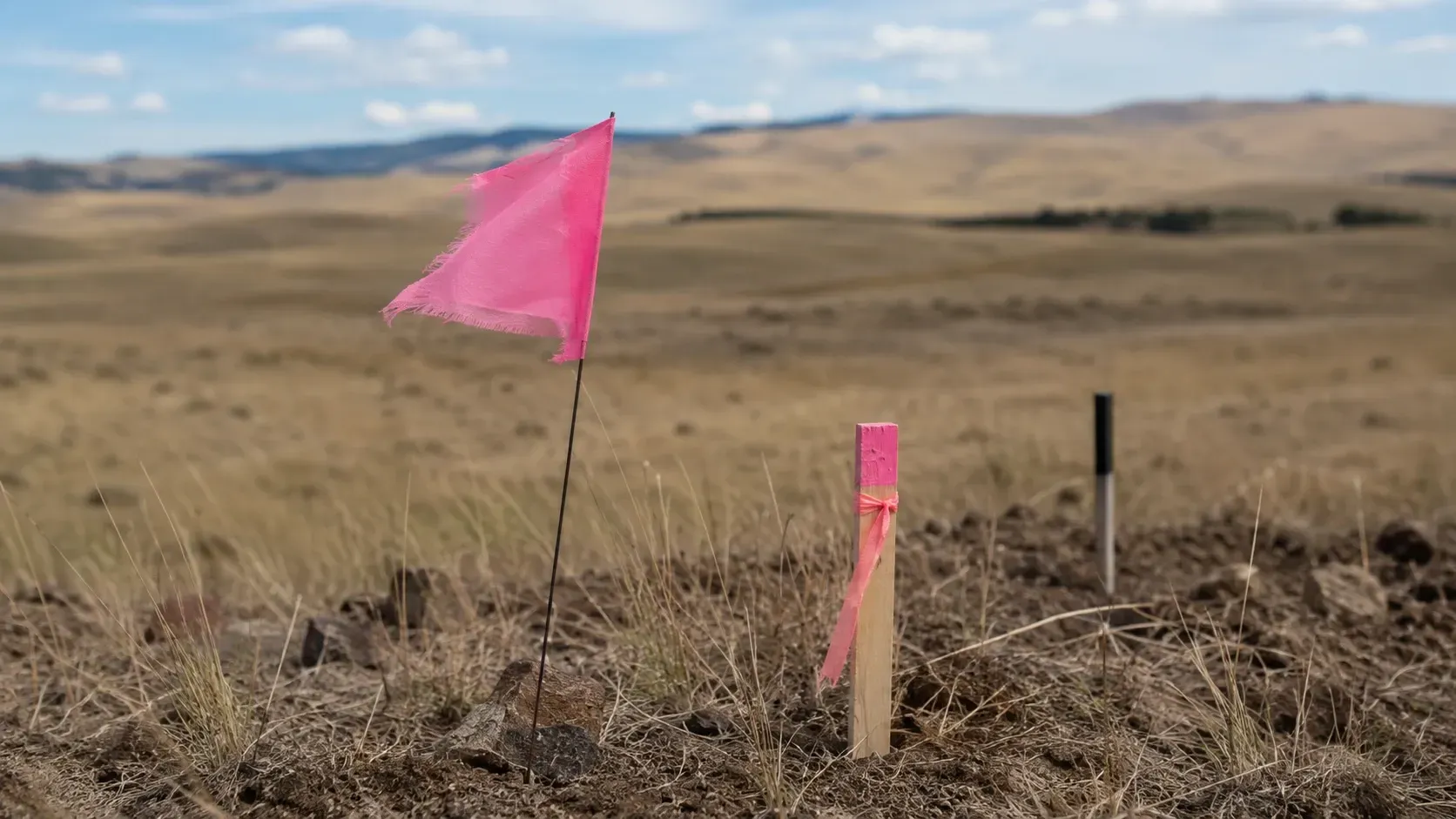
1. Access
Access has two components. Legal access is the recorded right to reach the property through a road or easement. Practical access is whether construction equipment, concrete trucks, delivery vehicles, and daily traffic can reach the site under real conditions throughout the year. A road that works in summer may drift with snow in January or turn to mud during spring runoff. Before you close, confirm that access is legally recorded, find out who maintains the road and at what cost, and consider whether the access route can handle the construction activity your project will require. A concrete pour, an excavator, and a lumber delivery need more than a passenger car can navigate.
2. Utilities
Some Wyoming parcels have power at or near the lot line. Others require extensions that can run $10,000 to $50,000 or more depending on distance and terrain. Municipal water and sewer are available on some properties, particularly those within city limits or established developments. Rural properties typically need a private well and a septic system. Well drilling costs vary based on depth and local geology but commonly run $8,000 to $25,000 or more. Septic system installation typically adds $10,000 to $30,000 depending on soil conditions and system design. The Wyoming Department of Environmental Quality oversees permitting for small wastewater systems, and permitting authority can vary by jurisdiction. All of these costs belong in the budget before you finalize a land purchase.
3. Site Conditions
Walk the land with honest eyes. Where is it flat enough to build? Where does water flow naturally? Is there slope that will require excavation, retaining walls, or engineered foundation work? Are there soil conditions that affect septic feasibility or structural design? Is there a drainage pattern that could cause problems for a slab, a driveway, or a building foundation over time? A sloped site is not automatically a problem, but it may require more preparation than a level one. A low-lying area that drains well in summer can behave very differently during spring runoff. Identifying these conditions before you buy puts you in control of the budget rather than reacting to it.
4. Zoning, Covenants, and Use Restrictions
County or city zoning establishes what types of buildings are permitted, what setbacks apply, what uses are allowed, and what approvals may be required beyond a standard building permit. Recorded covenants and deed restrictions can go further, restricting exterior materials, building height, accessory structures, agricultural use, commercial activity, and short-term rental. If you are planning a working farm or ranch, a commercial building, or a multi-structure property, confirm that the land allows your full intended use before you plan around it. Your title company or real estate attorney can help you locate and review all recorded restrictions during due diligence.
5. Permits and Local Requirements
Construction in Wyoming requires permits at the county or city level depending on whether the property is inside a municipality or in the unincorporated county. Beyond the building permit itself, your project may require a driveway permit, a septic permit, a floodplain development permit if any portion of the property falls within a designated flood zone, and additional permits depending on the scope and nature of construction. Getting clarity on permit requirements during due diligence helps you understand the full timeline and cost of the project before you are committed to the land. Some projects also require engineering review and approval before permits are issued, which affects both timeline and budget.
How the Structure You Want Affects the Land You Should Buy
The building you are planning should shape how you evaluate every parcel you consider. A custom home has different site requirements than a working farm or ranch operation, and both have different requirements than a commercial property. Starting with a clear picture of what you want to build helps you evaluate land with the right criteria instead of discovering after closing that the parcel does not support the project.
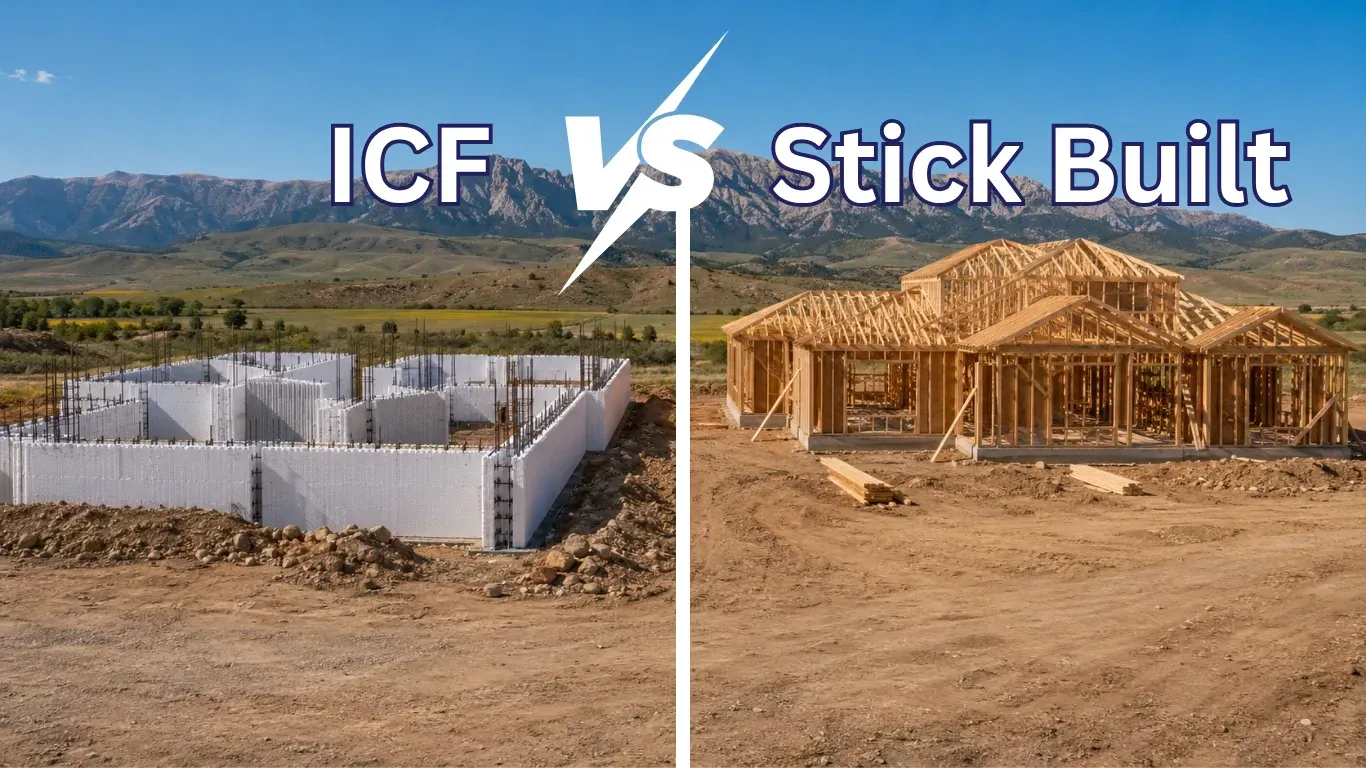
For a custom home, the priorities are typically a buildable area that supports the footprint and any outbuildings, winter-capable driveway access, drainage that protects the foundation, and utility availability within a budget that fits the overall project. If you want to build on your land with a custom ICF concrete home, you also need adequate access for concrete trucks and staging equipment during the pour. ICF construction requires consistent heavy-vehicle access throughout the foundation and wall phase, and a site that is difficult to reach adds real cost to the build.
For a working farm or ranch, the land evaluation shifts toward open usable acreage, equipment access through appropriate door and approach widths, space for a concrete slab, drainage around working areas, and utility capacity for the intended agricultural use. A post frame shop or agricultural building also needs to meet local setback requirements and, where living quarters are included, all applicable residential building codes for insulation, mechanical systems, plumbing, and electrical.
For a commercial property, site requirements become more specific and the margin for error is smaller. Traffic flow, customer and employee parking, delivery access, utility capacity for the intended use, zoning compliance, drainage after paving or site development, and room for future expansion all need to be evaluated before purchase. A parcel that functions well for a small service business may not work for a warehouse, a hospitality use, or a business with regular heavy vehicle traffic. Involving both a builder and potentially a civil engineer early in the commercial site evaluation process can prevent significant cost and redesign expense down the road.
Why Getting a Builder Involved Before You Close Makes Sense
A real estate agent helps you find land, evaluate market value, and navigate the purchase process. A builder helps you understand whether the land is actually right for what you want to build on it. Those are genuinely different forms of expertise and both matter in a land purchase that is tied to a construction project. Involving a builder before you close, or at minimum before your due diligence period ends, gives you a construction perspective on the site that a real estate professional is not trained to provide.
A builder will look at access, slope, staging areas for construction equipment, concrete delivery logistics, excavation requirements, drainage, building placement, and construction sequencing in ways that go beyond what a listing description or a casual site visit will reveal. That conversation does not need to be formal or time-consuming. A site visit with an experienced local builder can give you a realistic picture of what the land requires and what it will cost to prepare in an hour. That hour can prevent months of frustration and tens of thousands of dollars in costs you did not plan for.
For buyers who cannot be on site regularly, the builder relationship also serves as a form of local representation during the planning process. A builder who understands the land and the construction goals can help flag issues early and keep the project moving without requiring you to be physically present for every decision.
🚩Red Flags to Watch for When Evaluating Wyoming Land to Build
Unclear or unrecorded access is the most serious red flag. If a parcel does not have a legally recorded right of access, construction can be delayed or blocked entirely if the informal arrangement that allowed access in the past changes. Confirm that access is recorded and clear before you close, not after.
Utility assumptions are another common problem. A property that appears close to a power line may still require an expensive extension to connect. A parcel that looks suitable for septic may not pass a soil perc test, which determines whether a conventional system will work. If the soil does not pass, you may need a more expensive engineered system or the property may not support development at all. These are findings you want before closing, not after.
Covenants and restrictions that limit your intended use can be equally costly. Rural land does not automatically mean unrestricted land. A subdivision covenant can prevent metal buildings, commercial activity, certain exterior materials, or the agricultural buildings you had planned. Read everything in the title report before you commit.
The final red flag is buying land without matching it fully to your goals. The right parcel for your project is the one that supports everything you intend to build within a budget and timeline that actually work. The view is one factor. The full buildability picture is what makes the difference between a project that goes smoothly and one that runs over budget before construction begins.
Ready to Talk Through Your Land and Your Build?
Great Western Contracting works with landowners and buyers across Northeast Wyoming who are planning custom homes, farm and ranch buildings, and commercial construction. If you are evaluating a parcel or already own land and want to understand what it will take to build on it, we can walk through the site with you and give you an honest picture of what the project involves before any commitment is made.
Buying land in Wyoming is the first step. Contact us to talk through your land and your goals. That conversation will give you a much clearer picture of what building on your property actually looks like.
About Great Western Contracting
Great Western Contracting is Sheridan County's trusted builder for custom ICF concrete homes, post frame buildings, barndominiums, commercial construction, and historic restoration across Northeast Wyoming. Built on 30 years of hands-on experience, the company helps homeowners, ranchers, and business owners plan projects that fit their land, their budget, and the demands of the Wyoming climate. From the first honest conversation through the final walkthrough, every project is handled with straight answers, careful planning, and craftsmanship built to last.
Ready to Build? Let's Talk.
Tell us about your land, your project, and what you want to build. Great Western Contracting will get back to you within one business day.
Ready to Build on Wyoming Land?
If you are planning a custom ICF concrete home, a post frame building, a commercial structure, or a restoration project across Northeast Wyoming, our team is here to help you plan it right before the first dollar is committed. Reach out to Great Western Contracting to talk through your property, your goals, and what honest construction planning looks like.